

News & Insights
Photo courtesy of: Greg Land
Community colleges are becoming America’s workforce infrastructure
For generations, community colleges have been known as affordable gateways to higher education. Today, they are taking on an even larger role. Across the country, these institutions are becoming the primary link between employers struggling to fill critical positions and workers seeking faster, more direct pathways to rewarding careers. That shift is transforming more than academic programs. It is changing what community college campuses need to be.
From advanced manufacturing and healthcare to clean energy, construction, cybersecurity, and semiconductor production, employers are looking for graduates with practical, job-ready skills. At the same time, students are increasingly pursuing shorter-term credentials, industry certifications, apprenticeships, and career and technical education programs that can lead directly to employment. Recent federal investments in workforce-focused education are accelerating this trend, while employers are seeking deeper partnerships with educational institutions to build the talent pipeline they need.
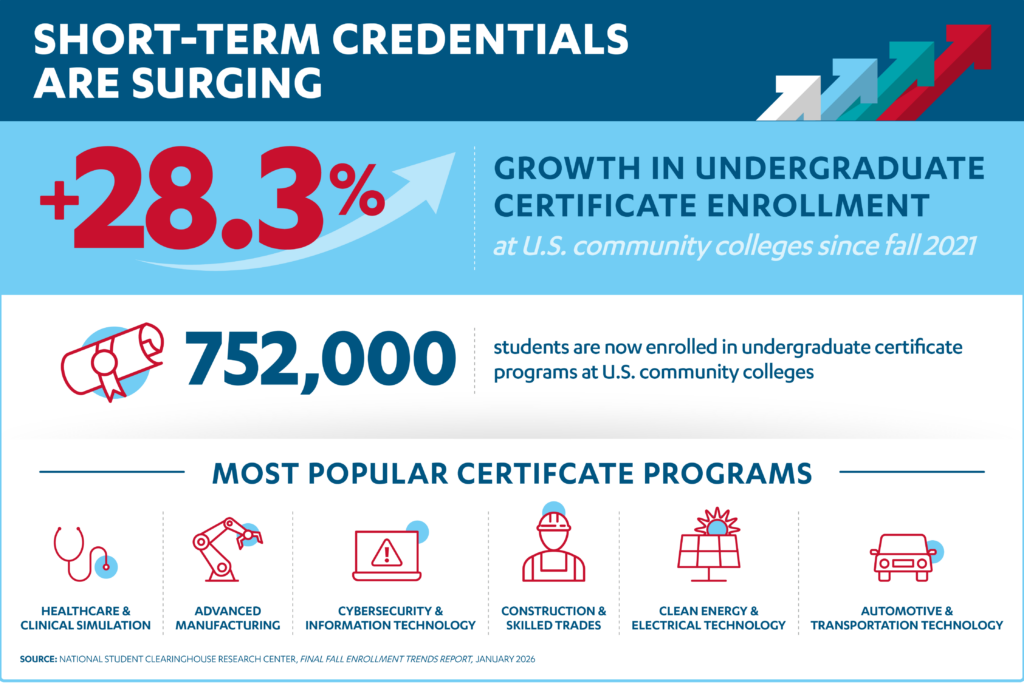 Much of the conversation has focused on curriculum. But that may be the least interesting part of the story. The more important question is this: If community colleges are becoming the workforce engines of their regions, should their campuses still be planned like traditional academic institutions?
We believe the answer is no.
Historically, campus planning centered on enrollment projections, classroom utilization, and student services. Those priorities remain important, but today’s workforce economy requires colleges to think more broadly.
Instead of asking, “What programs should we offer?” institutional leaders should also be asking, “How can our campus become an indispensable part of our region’s workforce infrastructure?” That shift in thinking changes nearly every planning decision.
Workforce education increasingly depends on specialized environments that mirror the industries students will enter, whether that’s healthcare simulation labs, advanced manufacturing spaces, robotics labs, construction technology facilities, culinary teaching kitchens, or cybersecurity labs. These spaces must be flexible enough to accommodate evolving technologies and changing employer needs, not just in today’s curriculum, but over decades.
We’re already seeing this evolution take shape across a wide range of industries. At Evergreen Valley College, B&D supports facilities that help prepare students for careers in electric vehicle technology through Tesla’s START technician program, while San José City College’s nationally recognized cosmetology and esthetics programs demonstrate that workforce education is just as critical in high-demand service professions as it is in advanced manufacturing and technology.
The campus itself must also become more permeable. Employers are no longer simply advisory board members who meet a few times each year. Increasingly, they are collaborators who shape curriculum, provide equipment, host apprenticeships, recruit directly from campus, and in some cases deliver training alongside faculty. Campus facilities should make those partnerships easier, with flexible instructional spaces, collaborative environments, and environments designed to support both students and industry.
Equally important, tomorrow’s workforce campus serves more than traditional college students. High school dual-enrollment participants, incumbent workers seeking new certifications, career changers, veterans, and adult learners all have different schedules and different needs. Facilities must support evening and weekend programming, short-term credentialing, stackable certificates, and multiple points of entry throughout a learner’s career.
In other words, colleges are no longer simply educating students. They are supporting regional economic development. That distinction matters.
California’s community colleges provide a compelling snapshot of where workforce education is headed. Across the state, colleges are strengthening partnerships with employers, expanding career-focused programs, and investing in facilities that connect students directly to regional industries. Whether preparing technicians for the rapidly growing electric vehicle market, educating future healthcare professionals, or training students for careers in cosmetology, construction, advanced manufacturing, and other essential fields, these institutions are redefining what a community college campus can be.
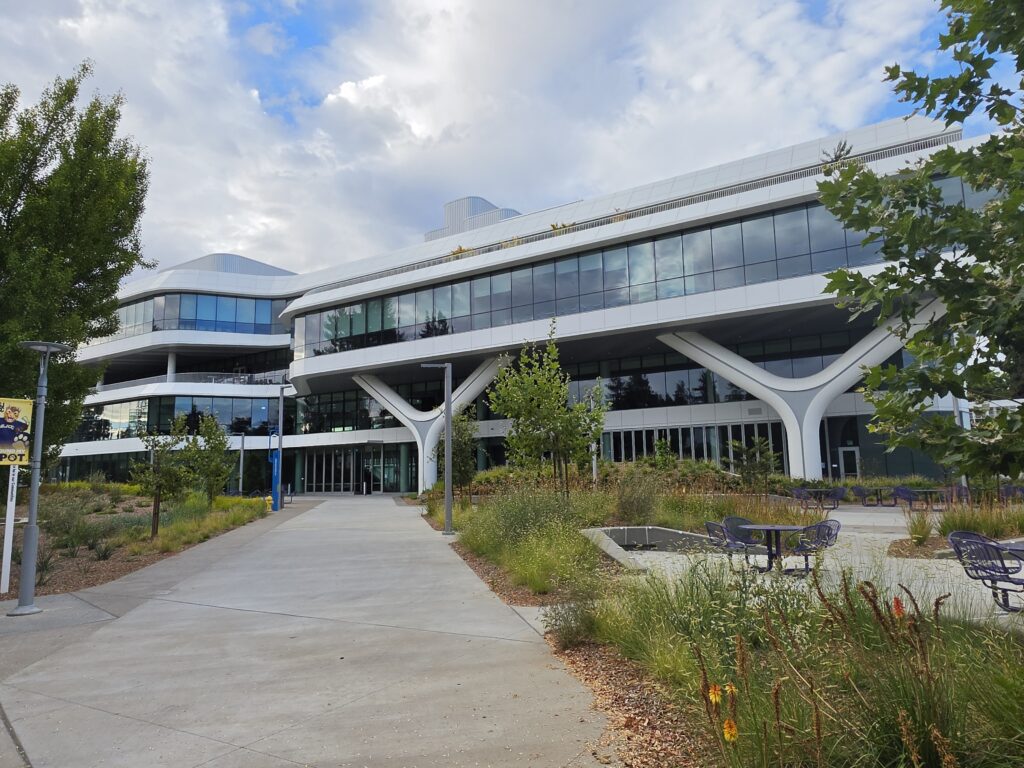
San José City College’s new Career Education Complex illustrates this evolution in action.
Developed with B&D serving as the bond program manager and providing design management services, the facility brings together career education programs that had previously been dispersed across campus into a centralized hub designed around today’s workforce needs. Purpose-built instructional labs, modern learning environments, student collaboration areas, and spaces that support industry-aligned education reflect a broader philosophy: workforce education should not be treated as a separate corner of campus. It should be integrated into the institution’s identity and positioned to evolve alongside the industries it serves.
Located in the heart of Silicon Valley, the complex supports programs aligned with one of the nation’s most dynamic regional economies, helping connect students with high-demand career opportunities while strengthening partnerships between education and industry. Rather than simply replacing aging facilities, the project demonstrates how thoughtful campus planning can advance both student success and regional competitiveness.
While every community has different workforce priorities, the underlying lesson is universal. Facilities should not merely accommodate workforce programs. They should actively strengthen the workforce ecosystem that surrounds them.
Technology will continue to evolve. Industries will emerge, expand, and transform. The careers students pursue a decade from now may not even exist today. Community colleges cannot predict every change, but they can prepare for it.
That means designing adaptable facilities rather than highly specialized buildings with limited flexibility. It means planning for partnerships as carefully as programs. It means viewing capital investments not simply through the lens of enrollment growth, but through their long-term contribution to workforce development, economic resilience, and community prosperity.
Community colleges have always been engines of opportunity. But increasingly, they are becoming engines of regional competitiveness as well.
The institutions that lead over the next decade will not simply build more career education space. They will create campuses that function as workforce infrastructure, bringing together education, employers, industry, and community partners in ways that strengthen the regional economy for years to come. Those campuses will be flexible enough to support everything from electric vehicle technology and advanced manufacturing to healthcare, cosmetology, culinary arts, and industries that have yet to emerge.
Because in the future of higher education, the most valuable campus may not be the one that grants the most degrees. It will be the one that creates the strongest connections between learning, work, and community.
Photo of San José City College by Rico Dawson-Velez
Rico Dawson-Velez is a Project Manager at Brailsford & Dunlavey, where he helps community colleges and K-12 school districts across California plan and deliver capital projects that strengthen education and the communities they serve. Drawing on more than 20 years of experience in construction and program management, he focuses on creating facilities that support student success, workforce development, and long-term community impact. Learn more about Rico in his Ask the Expert interview.


