

News & Insights
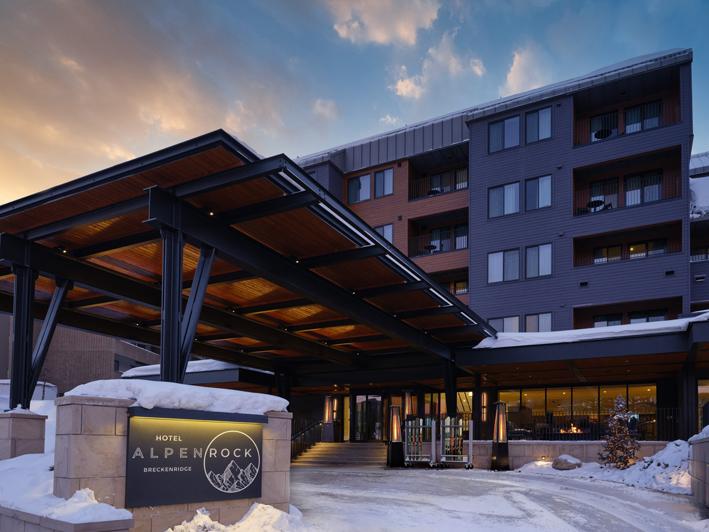
Photo courtesy of: Greg Land
By Mark Knott, Vice President, Hospitality
Hospitality projects are always complex. Even a straightforward hotel renovation involves thousands of moving parts, multiple contractors and vendors, tightly coordinated schedules, and a fixed opening date guests are already counting on. But when those same projects move outside established urban centers and into remote markets, logistics stops being a background function and becomes a primary driver of success.
For hospitality owners and developers, the challenge is not just understanding the logistical challenges remote development entails, but also identifying design and construction solutions that can deliver some of the most unique and compelling guest experiences in the world.
Remote markets are not defined by geography alone. While they often include island destinations, mountain towns, or secluded resort areas, remoteness is better understood as a scarcity of resources. A market becomes “remote” when there is limited access to:
Even locations within the continental U.S., such as ski resort towns in Colorado, can face these constraints with logistics taking on far greater importance.
Hospitality projects rely on globally sourced finishes, furnishings, and equipment, and remote markets can quickly turn small delays into major setbacks. As a result, logistics-driven hospitality is less about reacting to issues as they arise and more about anticipation: planning what is needed, when it must arrive, and how it will be installed, often months before construction begins.
Labor is often the single greatest challenge—and cost driver—in remote projects. There are typically three layers of constraint:
To compensate, developers often:
Even then, labor availability can fluctuate. A small disruption, such as a handful of workers calling out, can significantly impact progress when there is no backup pool.
Transporting materials to remote locations introduces both cost and coordination challenges. Shipping is influenced by:
For example, seemingly simple design choices like using heavy stone pavers can dramatically increase freight costs. In some cases, material decisions can add millions to a project budget purely due to transportation.
Additionally, remote projects often lack storage capacity, requiring materials to arrive in carefully timed sequences aligned with installation.
In many remote markets, developers are not just building a hotel—they are building the systems that make the hotel possible. Projects may require:
For example, a recent island resort project we’ve worked on that included a large lagoon-style pool that required nearly 60 days to fill. That single feature depended on power, water treatment systems, testing, and approvals, with everything needing to be completed in precise sequence before filling could begin.
This level of interdependency means delays in one area can ripple across the entire project.
Permitting and inspections can be unpredictable in remote regions. Unlike major cities with established processes, remote jurisdictions may:
In some cases, inspectors or officials must travel from other regions or islands, adding further delays and uncertainty.
Despite these challenges, successful projects in remote markets are absolutely achievable with the right approach.
In remote markets, logistics planning must begin almost immediately. Schedule, budget, and procurement are tightly interlinked, and long-lead items often need to be released before design is fully complete. Early alignment allows teams to balance conservatism with flexibility, avoiding both costly delays and excessive carrying costs.
Developers must build integrated schedules that align:
Successful teams build contingency into both schedules and budgets, ensuring that disruptions do not derail the entire project.
To reduce on-site labor demands, teams increasingly rely on prefabrication. Examples include:
While prefabrication can increase upfront costs, it often reduces risk, improves quality, and shortens installation time in labor-constrained environments.
Design decisions must balance aesthetics with logistics. Remote projects demand constant iteration across design, cost, and logistics. Teams must ask not only “what do we want?” but “where is it essential, and where can flexibility live?”
In some cases, substituting materials (such as poured concrete instead of imported pavers) can significantly reduce cost and complexity without compromising the guest experience.
Perhaps the most critical factor is assembling a team with relevant experience. Success in remote markets depends heavily on choosing partners with proven experience in similar conditions. General contractors often self-perform or directly control more scopes than in urban projects, including electrical, mechanical, and concrete work.
Understanding a contractor’s internal capabilities (and their experience of delivering in remote environments) is critical.
Delivering differentiated guest experiences requires acknowledging that logistics is not just a function of schedule and order, but rather is a foundational strategy that can make or break a project.
With disciplined planning, experienced teams, and a willingness to innovate beyond tried-and-true approaches, logistics-driven hospitality development can transform remote challenges into unforgettable destinations.
This thought leadership essay was originally published in the April 2026 issue of Hospitality Insights, our bimonthly newsletter reporting on key projects, trends, and insights across the hospitality industry, . To subscribe, click HERE.


