

News & Insights
Photo courtesy of: Greg Land
How can a school investment serve the whole community?
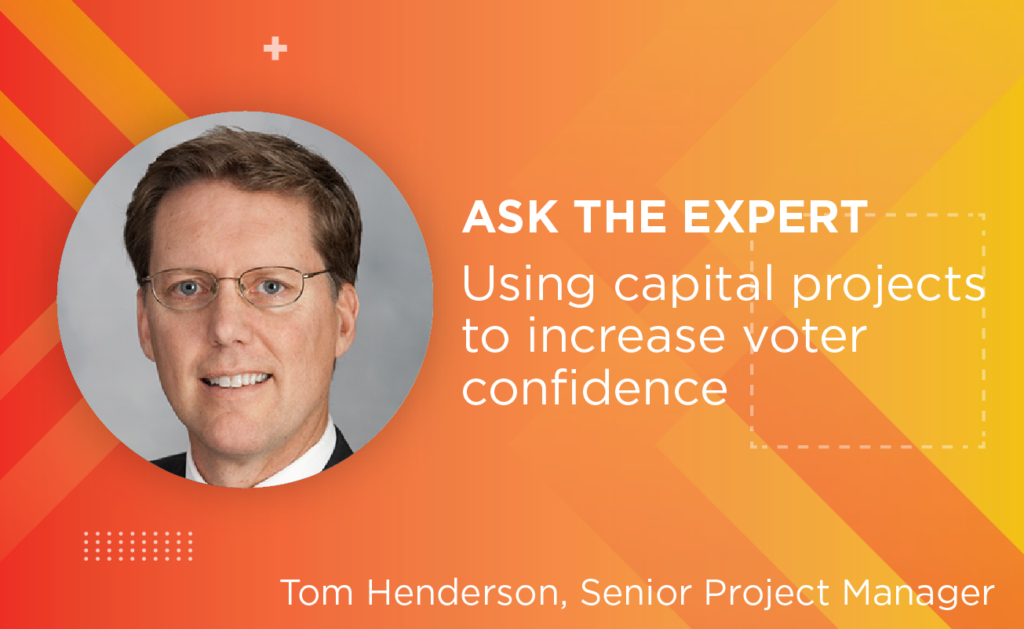
Campaign promises only go so far. Voters need to see results. In today’s Ask the Expert, Tom Henderson, senior project manager at Brailsford & Dunlavey, shares how public leaders can get more from every taxpayer dollar, and how one jurisdiction used its school modernization program to build trust with the community.
B&D: When you’re managing a project funded by public dollars, how do you make sure you’re delivering what the community actually needs?
Tom Henderson: Most elected and appointed officials we work with share the same goal: making their communities better. But what sounds better on paper isn’t always what will have the greatest long-term impact.
That’s why we spend time listening to the people who’ll actually use the space. Focus groups and community conversations help us understand how a neighborhood uses a facility and what it needs from it. My job is to bring that community perspective into our work with school leadership and operations staff, so what we design works for the people using, running, and maintaining it.
B&D: Over the years, DCPS has raised the bar on what a school can do for its community. Where have you seen that evolution most clearly?
TH: The era of schools being a row of classrooms and nothing more is over. With DCPS, the focus has been on true community integration. We’re creating modern learning environments with the technology students, but we’re also thinking beyond the classroom. We’re incorporating recreational spaces and childcare facilities that can meet the needs within the surrounding community.
B&D: How can a public building project do more for the community than it was originally meant to?
TH: A well-planned capital project can become an economic engine for its neighborhood. I see two particularly big opportunities: One is workforce and economic development. Public investment can create good-paying jobs and opportunities for people in the community. The other is bringing public services together in one place. When agencies share a location, we can make better use of our facilities and public resources.
B&D: If a public-sector manager wants to get the most from every dollar they’re given, what should they ask at the beginning of a project?
TH: The most effective public officials challenge assumptions from the very beginning. They ask, “What problem are we actually trying to solve, and is this the most cost-effective, long-term way to solve it for the long term? You’re not designing only for the first day of school in 2026 but for each first day of school in the next 30 years. That’s how you get more from public dollars and give taxpayers confidence that their investment was well spent.
—
Ask the Expert is written and produced by Allison Bruns. Big thanks to Tom Henderson for participating. If you have a topic you’d like one of our experts to tackle, submit them here.


