

News & Insights
Photo courtesy of: Greg Land
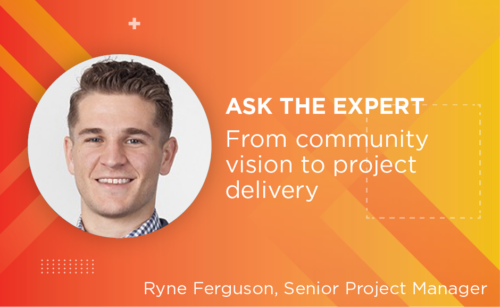
How successful public projects begin with listening
Whether they’re building a new school, replacing an aging community center, or modernizing an existing campus, public owners across the country face the same challenge: turning community priorities into successful projects. We sat down with Brailsford & Dunlavey’s Ryne Ferguson to discuss why the best projects begin with listening, and how good project management helps transform community vision into reality.
B&D: You started your career as an engineer. What led you into project management?
Ryne Ferguson: I still enjoy solving technical problems, but I realized pretty early that I enjoyed solving people problems even more. The technical side absolutely matters. You have to understand budgets, schedules, scope, and risk. But those things only get you so far. I’ve always believed good project managers need what I jokingly call “bedside manner.” You have to listen, build trust, and really understand what people are trying to accomplish. That’s how better decisions get made throughout the life of a project.
B&D: Many school districts and municipalities know what they want to accomplish but aren’t experts in design and construction. Where does project management make the biggest difference?
RF: A lot of our clients know exactly what they want to accomplish. They want a facility that serves their community, reflects their priorities, and makes good use of public resources. What they don’t necessarily have is the technical background to turn that vision into a successful construction project.
B&D: You’ve said the Marlow Heights Community Center in Prince George’s County, Maryland, is one of your favorite projects. What made it so special?
RF: For me, it was never just about replacing an aging building. The community had a real vision for what that new center could mean for the neighborhood, and you could feel that excitement throughout the project. People showed up at milestone events, followed the construction, and genuinely cared about seeing it succeed. Now that it’s open, we’ve heard from the community that they now have a new “problem,” which is that too many people want to use it. That’s a good problem to have, right? It tells you the building is doing what it was designed to do and it’s become a place people actually want to spend time in, which is incredibly rewarding.
B&D: Looking at a project like Marlow Heights, how do you know when a public project is truly successful?
RF: Finishing on time and on budget is important. Those are table stakes. But I don’t think that’s what defines success. Communities change. Years ago, everyone wanted tennis courts. Today, it’s pickleball. That’s a simple example, but it illustrates a bigger point. A project should reflect how people actually live, work, and gather. Great facilities meet today’s needs while remaining flexible enough to adapt as those needs evolve. If a building opens on schedule but doesn’t serve the community, then we haven’t really accomplished the goal.
That’s where we come in. We understand design, construction, budgets, and schedules, but we also know how to listen. Our job is to take what the community is trying to achieve, organize those ideas into a clear path forward, and help deliver a project that stays true to that original vision from start to finish. At the end of the day, our role is to bridge the gap between community vision and technical execution. When those two things come together, that’s when you end up with projects that people are proud of for years to come.
Thank you to Ryne Ferguson for participating in Ask the Expert. Have a topic you’d like one of our experts to cover in a future issue? We’d love to hear your ideas. Submit them here.


