

News & Insights
Photo courtesy of: Greg Land
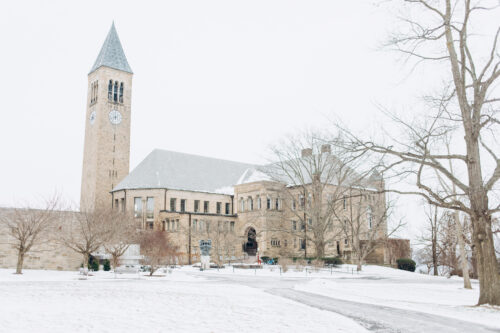
Across higher education, campuses are rich in physical assets but hampered by facilities that are burdened with growing deferred maintenance and physical limitations. Buildings designed for single-purpose use—lecture halls, departmental corridors, isolated labs—are underutilized or misaligned with contemporary learning models. For many, repurposing these spaces isn’t a nice-to-have. It’s a necessity to get and maintain the competitive edge.
The surprising part? Most often, the challenge is not a lack of square footage, and the solution isn’t necessarily to build a brand-new building. In many cases, intentional upgrades – reconfigured layouts, modernized systems, improved acoustics and lighting, and adaptable furniture – can dramatically expand the usefulness of existing buildings.
But space alone does not drive new behavior. The most successful institutions approach repurposing a space holistically, recognizing that facilities, policy, and teaching models are deeply interconnected. And when existing assets are thoughtfully retooled, institutions can control capital costs and reduce long-term maintenance burdens while achievig a more relevant roster of facilities. In an era of enrollment volatility and financial scrutiny, flexibility is an institutional necessity.
Modern learning environments increasingly need to accommodate collaboration, independent work, digital engagement, and academic support services at different scales– often within the same building. When institutions adapt existing spaces with these realities in mind, they send a clear message: learning is dynamic, and the campus is designed to support evolving education models.
The future of higher education will be shaped by institutions willing to look critically at their campuses, challenge inherited assumptions, and make thoughtful, data-informed decisions about how space is used. And by seeing existing spaces not as a limitation, but as an opportunity, campuses can get and maintain the competitive edge.


